
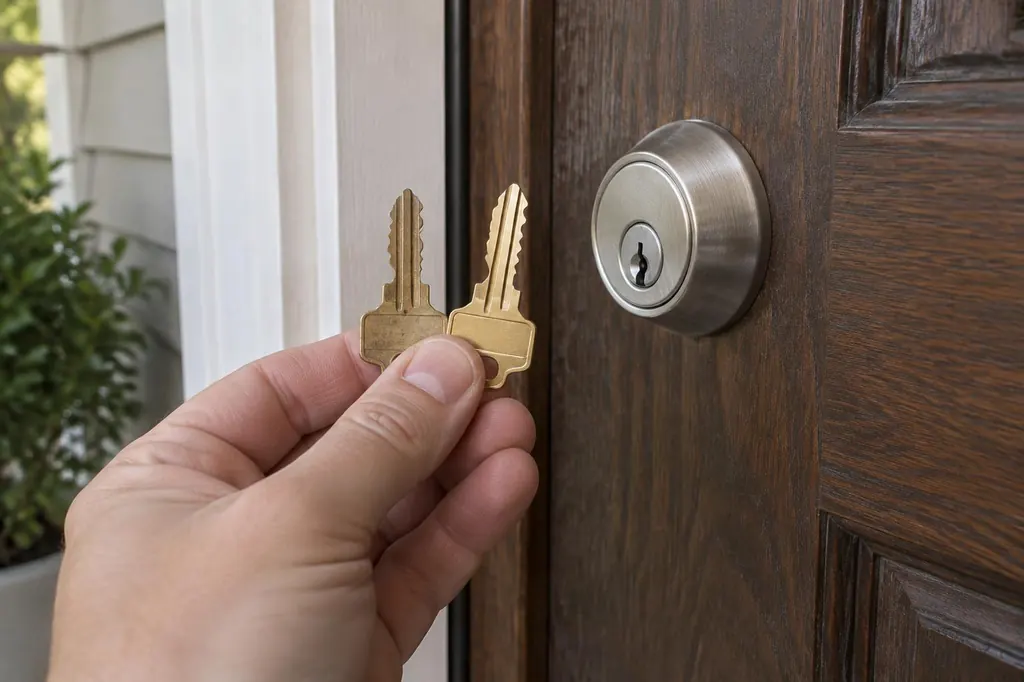
Quick answer
A sticking lock can result from a worn key, cylinder wear or a bolt rubbing against the strike. Compare gentle operation with the door open and closed; resistance only when closed often points to alignment. Try an authorized, undamaged spare key if available. Stop if the key needs force, and use only manufacturer-approved lubricant rather than household oil.
Notice when the problem happens
Does the key turn easily with the door open but resist when the door is closed? That often points toward door alignment or strike interference rather than a bad key cylinder.
Check the door without forcing it
Look for rubbing around the frame, sagging hinges and a latch that does not meet the strike opening. Avoid pushing hard on a key or using tools to force the bolt.
Consider key wear
A bent or heavily worn key can be unreliable. Compare operation with an authorized spare if one is available, and stop if the key feels likely to snap.
Weather and seasonal movement
Wood doors and frames can expand or contract as conditions change. A problem that appears only during certain weather may be connected to alignment, but the lock still needs a proper diagnosis.
Avoid the wrong lubricant
Not every lubricant is appropriate for every cylinder. Household oils may attract dirt or affect mechanisms. Follow the manufacturer’s guidance or ask a professional before applying anything.
When repair is enough
A locksmith may be able to adjust hardware, address loose mounting screws or service a cylinder. The correct fix depends on which component is actually causing the binding.
When replacement makes sense
A damaged cylinder, broken internal parts or unreliable bolt may justify new hardware. If the door itself is out of alignment, replacing the lock alone may not solve the issue.
Solve the binding, not just the symptom
If the lock still resists gentle operation, tell Ben's Locksmith whether it binds with the door open, closed or both, and whether a spare key behaves differently. Those observations help focus the inspection on the key, cylinder or door alignment. Avoid forcing the mechanism or adding household oil while you wait for an assessment.
Frequently asked questions
Why does my front door lock stick only when the door is closed?
The bolt or latch may be rubbing against the strike because the door has shifted or the hinges have sagged. Compare gentle operation with the door open. This observation helps diagnosis, but the door, frame and hardware still need inspection to confirm the cause.
Can a worn key cause a sticking lock?
Yes. A bent or worn key may fail to operate the cylinder smoothly. If you have an authorized spare in good condition, compare its operation without forcing either key. If both bind, the cylinder or door alignment may be involved instead.
Should I replace a sticking lock immediately?
Not always. A loose fastener, alignment issue or serviceable cylinder may be repairable. Replacement is more appropriate for broken internal parts or hardware that cannot operate reliably. A lock that prevents secure closing or safe exit should be assessed promptly.