
Quick answer
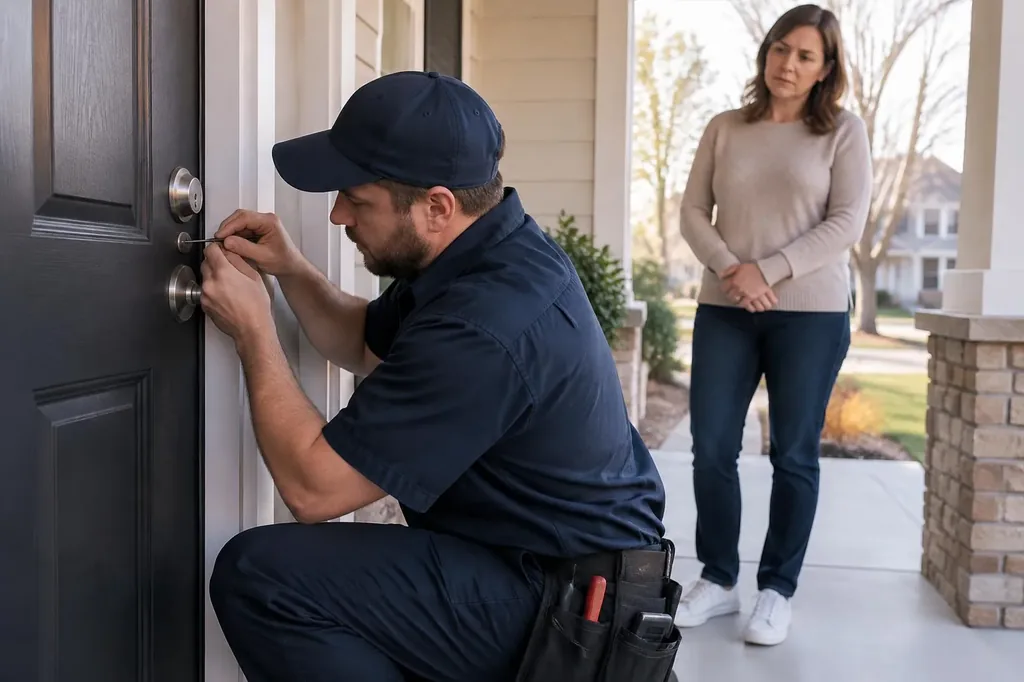
If you are locked out, move somewhere safe and contact a household member, trusted spare-key holder or property manager. Check only accessible entrances you are authorized to use; do not climb, break glass or force the door. If no legitimate spare is available, request a locksmith and prepare proof of occupancy. Call emergency services if someone inside faces immediate danger.
Start with safety, not the lock
If a child, vulnerable person, pet in dangerous conditions or an active cooking hazard is inside, call emergency services when appropriate. Otherwise move to a safe, well-lit place and check whether you can contact someone who has an authorized spare.
Check the simplest legitimate options
Try an accessible door that you are authorized to use, contact a household member or property manager, and look for a spare key arrangement. Avoid climbing, breaking glass or forcing a door; those approaches can cause injury and expensive repairs.
What to tell a locksmith on the phone
Give the neighborhood or address, whether the door has a knob lock or deadbolt, whether a key is inside, and whether the door or lock is visibly damaged. Ask about the service-call charge, labor, possible additional costs and accepted payment methods.
What non-destructive entry means
A qualified locksmith will assess the hardware and choose an appropriate authorized entry method. Some locks can be opened without replacing hardware, but not every situation permits that. Avoid any promise that every lockout is damage-free.
Why proof of occupancy matters
Expect a reputable technician to check that you are authorized to enter the property. A matching ID, lease or verification through a property manager may be used depending on circumstances.
After you get inside
If the keys were lost rather than simply left indoors, consider rekeying. If a sticky latch caused the lockout, ask for an inspection rather than ignoring a recurring mechanical problem.
Preventing another lockout
Arrange a secure spare-key plan with someone you trust, keep contact information available and consider a properly installed keypad lock if it fits your household. Avoid hiding keys in obvious outdoor locations.
Arrange safe, authorized entry
When no trusted spare key is available, give Ben's Locksmith the door type, your location and any visible damage before arranging an appointment. Have proof that you are authorized to enter, and ask what the proposed entry method involves. If someone inside is in immediate danger, contact emergency services rather than waiting for a routine lockout visit.
Frequently asked questions
Can a locksmith open a house door without drilling?
Some locks can be opened without drilling, but the hardware, condition and circumstances determine the available options. Ask the technician to explain the proposed method and any risk of damage before authorizing work. Damage-free entry cannot be guaranteed for every lock.
What if my identification is locked inside the house?
Tell the locksmith before the visit. A property manager, lease record or another reliable form of verification may help establish authorized access. The technician still needs to verify your right to enter; an ID left indoors does not remove that requirement.
Should I rekey the door after a lockout?
Leaving a key inside does not usually require rekeying. If the key was lost or stolen, rekeying a compatible lock can revoke access with that key. If the lockout came from a sticking latch or failing cylinder, have that mechanical problem inspected instead.